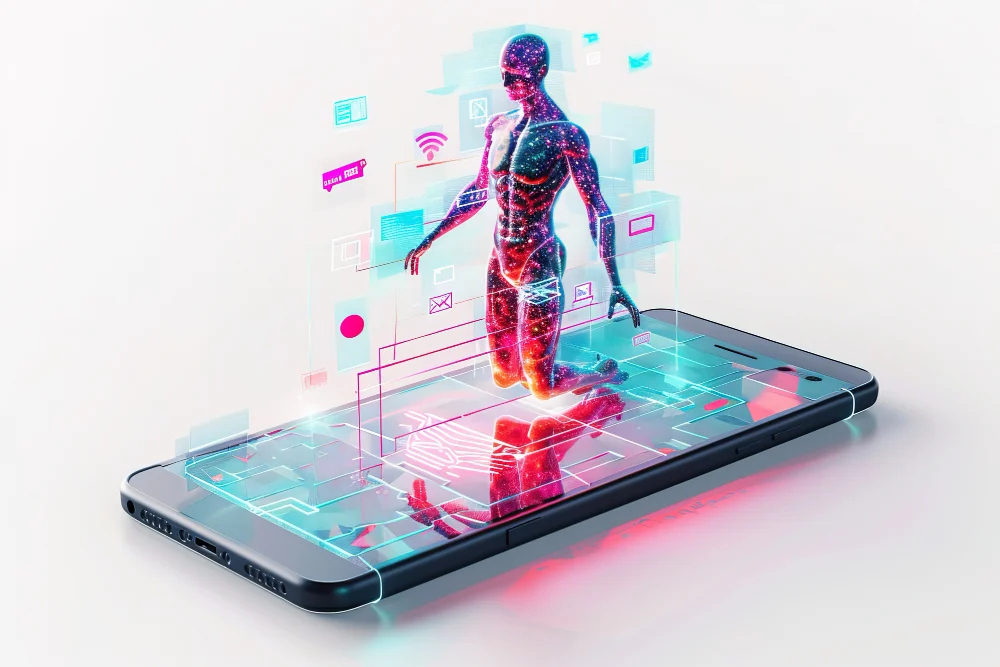
AI is becoming an indispensable partner for designers, functioning less as a replacement and more as a “co-pilot” or “creative collaborator.” Rather than diminishing the role of designers, it enhances their capabilities by improving efficiency, accelerating workflows, and expanding creative possibilities. By handling repetitive and time-consuming tasks, AI enables designers to devote more energy to strategic thinking, innovation, and solving complex design challenges.
Key Benifits os AI Designers
1. Rapid Prototyping and Iteration
AI tools allow designers to quickly generate multiple design variations, test ideas, and refine concepts in a fraction of the time it traditionally takes. This speed supports experimentation and helps designers arrive at better solutions faster.
2. Automation of Tedious Tasks
Routine processes such as resizing images, generating layouts, color matching, and formatting can be automated using AI. This reduces manual workload and frees designers to focus on more meaningful creative work.
3. Overcoming “Blank Page” Syndrome
Starting from scratch can be one of the most challenging parts of the design process. AI can generate initial concepts, layouts, or visual directions, providing a strong starting point that designers can build upon and refine.
4. Enhanced Creativity and Exploration
AI expands creative boundaries by offering unexpected ideas, styles, and combinations that designers may not have considered. It encourages exploration and experimentation, often leading to more innovative outcomes.
5. Data-Driven Design Decisions
AI can analyze user behaviour, preferences, and trends, helping designers make informed decisions. This leads to more user-centred designs that are both effective and impactful.
Application Across the Design Field
Graphic Design
AI is widely used to create illustrations, social media content, marketing materials, and even typography. It helps streamline production while maintaining visual quality and consistency.
UI/UX Design
Tools such as Uizard or Figma plugins can transform sketches into digital prototypes, generate wireframes, and simulate user interactions. This significantly speeds up the design and testing process.
Interior Design and Branding
In interior design, AI can generate 3D layouts, suggest furniture arrangements, and recommend colour palettes. In branding, it can produce multiple logo concepts, brand identities, and visual variations quickly, supporting faster decision-making.
The Evolving Role of The Designers
AI is reshaping the designer’s role from a hands-on creator to a curator, strategist, and creative director. Designers are increasingly responsible for guiding AI tools, selecting the best outputs, and ensuring that the final work aligns with human needs and business goals.
Human-AI Collaboration
While AI excels at speed, scalability, and generating variations, it lacks essential human qualities such as empathy, cultural understanding, and contextual awareness. Designers bring these critical elements, ensuring that designs are meaningful, relevant, and emotionally engaging.
Essential Skills for the Future
To thrive in this evolving landscape, designers must develop new competencies, including:
- AI literacy – understanding how AI tools work and how to use them effectively
- Prompt engineering – crafting precise inputs to guide AI outputs
- Critical evaluation – assessing and refining AI-generated content to meet quality and ethical standards
Conclusion
AI is not replacing designers—it is empowering them. By acting as a creative partner, AI enhances productivity, unlocks new levels of creativity, and allows designers to focus on what truly matters: crafting thoughtful, human-centred experiences. The future of design lies in the synergy between human intuition and machine intelligence, where each complements the other to produce exceptional results.